🌧️ Latin America holds nearly a third of the world’s renewable freshwater
🌽 Ample rainfall gives the region a comparative advantage in water-intensive crops
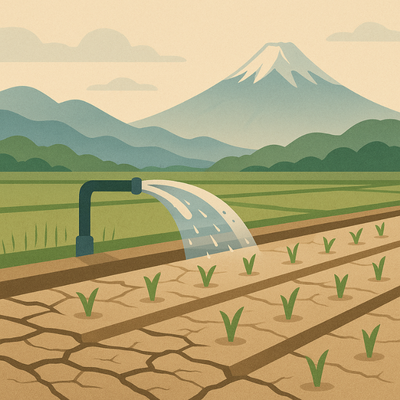
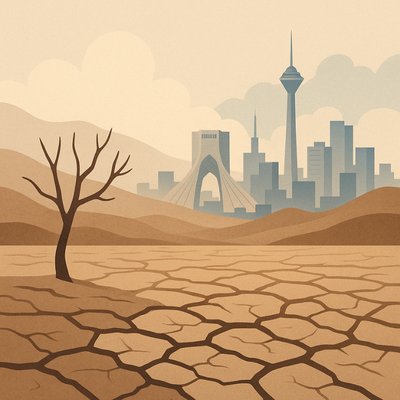
📉 As droughts hit Europe, Africa, and parts of Asia, global production is shifting
💰 Agri-export potential is growing, from soy to sugarcane to avocados
🌱 Sustainable water governance will determine who benefits—and how
As droughts drain harvests from Spain to South Africa, one region is quietly gaining ground: Latin America. With vast watersheds, deep aquifers, and some of the highest rainfall levels on Earth, countries like Brazil, Colombia, and Peru are emerging as future agricultural powerhouses—precisely because they are water-rich.
A natural comparative advantage
Latin America is home to roughly 29% of global renewable water resources, yet only 8% of the world’s population. The Amazon basin alone discharges over 6,000 cubic kilometers of freshwater annually. While parts of Mexico and the southern cone face water stress, much of the region remains hydrologically abundant.
This natural capital is translating into a competitive edge for water-intensive agriculture. Crops like soybeans, sugarcane, coffee, bananas, and avocados thrive in regions where irrigation is minimal or rain-fed yields remain high. In contrast, producers in Europe and Asia are grappling with shrinking aquifers, water use restrictions, and climate-fueled unpredictability.
Global shifts in supply chains
Drought is distorting global supply chains. Spain’s olive oil output dropped by more than 50% in recent years; California’s almond orchards are shrinking; India’s rice exports face water-related curbs. In response, buyers are diversifying sources—often turning to Latin America.
Brazil, for instance, has more than doubled its agri-export revenue since 2010, with water availability as a key enabler. Colombia’s coffee sector is rebounding as Asian competitors face erratic monsoons. Even lesser-known crops, like Peruvian blueberries or Ecuadorian cacao, are gaining market share.
These shifts aren’t just climatic—they’re economic. Foreign direct investment in agribusiness is rising, especially in irrigation-efficient technologies, processing infrastructure, and export logistics.
Risks and responsibilities
Yet water abundance is no guarantee of resilience. Poor management, pollution, and deforestation threaten long-term sustainability. Parts of Brazil’s Cerrado, despite high rainfall, face localized water scarcity due to unsustainable soy expansion. Conflicts over indigenous rights and land tenure are intensifying.
Moreover, global markets may reward short-term volume over long-term stewardship. Without robust governance, Latin America risks repeating mistakes made in overdrawn basins elsewhere.
The solution lies in smart growth: leveraging water wealth without depleting it. This includes:
- Zoning policies to protect headwaters and aquifers
- Data transparency on water use and crop water footprints
- Investment in rainwater harvesting and low-pressure irrigation
- Certification schemes that reward sustainable water management
A green export engine?
For global supply chains, Latin America offers a rare opportunity: water-secure food production in an increasingly water-insecure world. For local economies, the question is how to turn that comparative advantage into inclusive, sustainable growth.
If the region gets water governance right, it won’t just be the breadbasket of the future—it could become the world’s most resilient one.