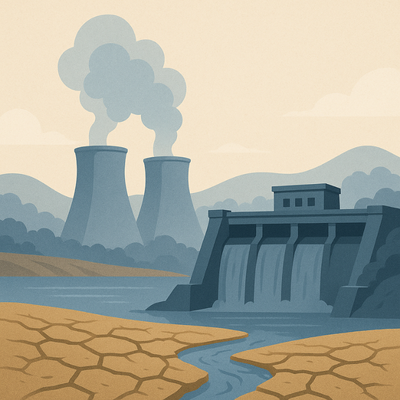
⚡ France relies on nuclear for over 60% of its electricity
🌡️ Heatwaves and low river flows are forcing reactors to shut down or reduce output
💧 Hydropower output has dropped to multi-decade lows
🏭 Drought is straining cooling systems, infrastructure, and supply security
🔋 The energy transition must reckon with water as a critical constraint
France is often hailed as a climate champion for its low-carbon electricity mix. With 56 nuclear reactors and hundreds of hydroelectric plants, it produces over 90% of its electricity from non-fossil sources. But this system depends heavily on water—a resource becoming increasingly unreliable.
A warm river, a cold shutdown
The summer of 2022 was a wake-up call. Amid scorching temperatures and widespread drought, several French nuclear reactors were forced to reduce output or temporarily shut down. The reason? River water—used to cool the reactors—had become too warm to be safely discharged back into the environment without overheating ecosystems.
This isn’t a one-off. In 2023 and 2024, similar patterns emerged. According to data from EDF, France’s national electricity provider, at least a dozen reactors saw output restrictions due to low river flow or high intake temperatures. The Rhône and Garonne rivers, which cool major nuclear sites, experienced historic lows in summer discharge.
France’s nuclear fleet was built assuming stable river conditions. But in a warming world, these assumptions no longer hold.
The hydro shortfall
Nuclear isn’t the only sector hurting. Hydropower, which usually provides 10–12% of France’s electricity, has also suffered. In 2022, hydroelectric output fell to its lowest level in over 30 years. Reservoirs in the Alps and Pyrenees failed to refill after a dry winter and spring. The trend persisted into 2024, with snowpack levels down by 35% in key catchments, delaying and reducing runoff.
In some regions, hydro output was down by over 40% during peak summer demand. This forced grid operators to rely more heavily on imports and fossil backups, raising both emissions and prices.
Water: the new bottleneck
Water availability is rarely discussed in energy policy—but that is changing. The French transmission operator RTE now includes water stress in its seasonal outlooks. Cooling and flow constraints are now considered operational risks, not edge cases.
A 2023 study by the International Energy Agency highlighted that over 40% of thermal power plants in Europe are in areas at risk of high water stress by 2040. France, with its centralized, river-dependent energy system, is particularly exposed.
Planning for a drier grid
Solutions exist—but they require foresight and investment. EDF is retrofitting some plants to improve cooling efficiency or switch to air-based systems. Pumped hydro storage and solar expansion are being accelerated. But trade-offs are unavoidable: many low-carbon technologies still depend on water, from hydrogen electrolysis to bioenergy.
The broader lesson is clear: climate resilience isn’t just about decarbonization—it’s about adaptation. As Europe’s rivers shrink and summers intensify, energy security will hinge on how well systems manage water.
France’s grid may be green—but to stay reliable, it must also become drought-proof.